
හැඳින්වීම
This manual provides instructions for the MICROWARE HDMI USB Audio Game Capture Card. This device allows you to capture HDMI video and audio signals from various sources and transfer them to your computer via USB 2.0 for recording, streaming, or live broadcasting. It supports input resolutions up to 3840x2160@30Hz and output resolutions up to 1920x1080@30Hz.

Image: The MICROWARE HDMI USB Audio Game Capture Card, a compact black device with HDMI input and USB output ports.

Image: The capture card highlighting its features: pure hardware, small size, easy to carry, and suitability for game live broadcasts. Icons indicate HDMI cable, USB port, HD resolution, and wide applicability.
සැකසුම් මාර්ගෝපදේශය
The MICROWARE HDMI USB Audio Game Capture Card is designed for plug-and-play operation, requiring no driver installation for most operating systems.

Image: A diagram illustrating the 'plug and play' nature of the capture card, showing it connected to a laptop and various use cases like webcam, gaming, and video conferencing.
පැකේජයේ අන්තර්ගතය
- 1 x MICROWARE HDMI USB Audio Game Capture Card
සම්බන්ධතා පියවර
- Connect your HDMI source device (e.g., camcorder, game console, TV box, phone, DSLR) to the HDMI input port of the capture card using an HDMI cable.
- Connect the USB output port of the capture card to a USB 2.0 port on your computer (Windows, macOS, or Linux).
- Your computer should automatically recognize the capture card as a video and audio input device.
- Open your preferred video acquisition software (e.g., OBS Studio, VLC, Amcap) and select the capture card as your video and audio input source.

Image: Diagram illustrating how to connect various HDMI input devices (Video Recorder, Webcam, TV Box, Game Player, Phone) to the capture card's HDMI input, and the capture card's USB output to a computer.
Supported Operating Systems and Software
The capture card supports Windows (WIN10, WIN8.1, WIN8, WIN7), macOS, and Linux operating systems. It is compatible with most acquisition software that supports USB Video Class (UVC) and USB Audio Class (UAC) standards, including:
- OBS චිත්රාගාරය
- VLC Media Player
- ඇම්කැප්
- Zoom (for video conferencing)
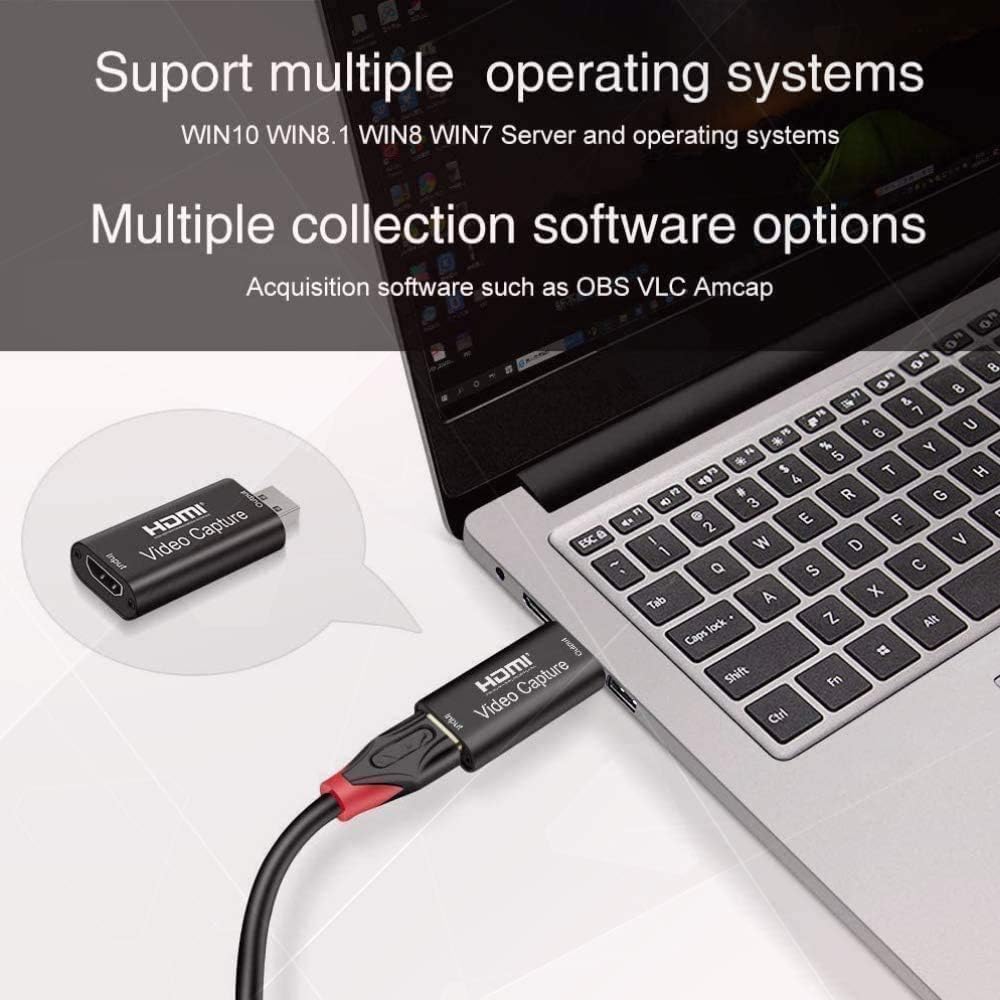
Image: The capture card connected to a laptop, with text indicating support for multiple operating systems (Windows, Mac, Linux) and acquisition software like OBS, VLC, and Amcap.
මෙහෙයුම් උපදෙස්
Once connected, the capture card functions as a bridge between your HDMI source and your computer.
a ලෙස භාවිතා කිරීම Webකැම්
You can use a DSLR camera, camcorder, or action camera as a professional webcam for your PC or Mac. Connect the camera's HDMI output to the capture card's HDMI input, then connect the capture card to your computer's USB port. In your video conferencing or streaming software, select the capture card as your camera source.
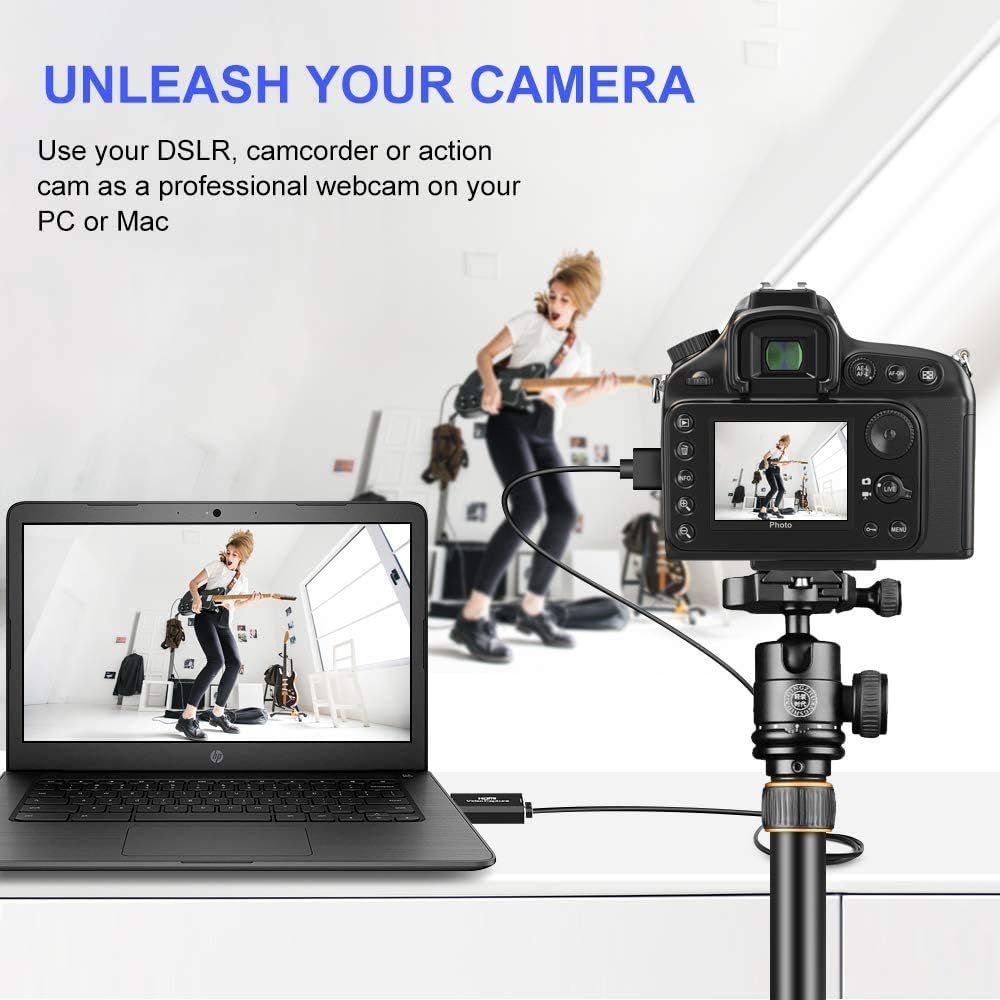
Image: A DSLR camera mounted on a tripod, connected via HDMI to the capture card, which is then connected to a laptop, demonstrating its use as a professional webකැමරාව.
ක්රීඩා සහ ප්රවාහය
Connect your game console (e.g., Xbox) to the HDMI input of the capture card. The card will transfer the game's video and audio to your computer, allowing you to record gameplay or stream live through compatible software. The USB 2.0 interface ensures smooth transfer for online and standalone games.

Image: A visual depicting the capture card's use in gaming, with a focus on smooth effects and HD capture quality.
වීඩියෝ සහ ශ්රව්ය පිරිවිතර
- ආදාන විභේදනය: Supports a maximum input resolution of 3840x2160 at 30Hz.
- ප්රතිදාන විභේදනය: Supports a maximum output resolution of 1920x1080 at 30Hz.
- වර්ණ ගැඹුර: 8/10/12-bit ගැඹුරු වර්ණ සඳහා සහය දක්වයි.
- HDMI කේබල් දිග: Supports AWG26 HDMI standard cable up to 15 meters (for 1080P and lower resolutions).
- බල සැපයුම: Operates without an external power supply.
නඩත්තු කිරීම
To ensure the longevity and optimal performance of your capture card, follow these general maintenance guidelines:
- උපාංගය පිරිසිදුව හා දූවිලි වලින් තොරව තබා ගන්න. පිරිසිදු කිරීම සඳහා මෘදු වියළි රෙද්දක් භාවිතා කරන්න.
- උපාංගය අධික උෂ්ණත්වයට, ආර්ද්රතාවයට හෝ සෘජු හිරු එළියට නිරාවරණය කිරීමෙන් වළකින්න.
- Do not drop or subject the device to physical shock.
- උපාංගය භාවිතා නොකරන විට සිසිල් වියළි ස්ථානයක ගබඩා කරන්න.
- Ensure proper ventilation around the device during operation to prevent overheating.
දෝෂගවේෂණය
If you encounter issues with your MICROWARE HDMI USB Audio Game Capture Card, refer to the following common problems and solutions:
- No Signal/Device Not Recognized:
- Ensure all HDMI and USB cables are securely connected.
- ඔබේ පරිගණකයේ වෙනත් USB පෝට් එකක් උත්සාහ කරන්න.
- Test with a different HDMI cable or source device to rule out cable/source issues.
- Restart your computer and the source device.
- Verify that your operating system and software are up to date.
- Video Lag or Choppy Playback:
- Ensure your computer meets the minimum system requirements for video capture and streaming.
- පද්ධති සම්පත් නිදහස් කර ගැනීම සඳහා පසුබිමේ ධාවනය වන අනවශ්ය යෙදුම් වසා දමන්න.
- Check the USB port. While the device is USB 2.0, using a higher bandwidth port (if available) or a different USB 2.0 port might help.
- Reduce the output resolution or frame rate in your capture software settings.
- අධික උනුසුම් වීම:
- උපාංගයට ප්රමාණවත් වාතාශ්රයක් ඇති බවත් එය ආවරණය කර නොමැති බවත් සහතික කර ගන්න.
- Avoid prolonged continuous use if overheating is a persistent issue.
- Consider using a USB extender if the device is tightly packed with other USB peripherals, as mentioned in some user feedback.
- ශ්රව්ය නැත:
- Check audio settings in your capture software to ensure the capture card's audio input is selected.
- Verify that the HDMI source device is outputting audio.
- Ensure your computer's audio drivers are up to date.
පිරිවිතර
| වෙළඳ නාමය | මයික්රෝවෙයාර් |
| ආදර්ශ අංකය | MMPL-HDMITOUSB3.0VDOCAPTURE |
| දෘඩාංග අතුරුමුහුණත | USB2.0, HDMI |
| ආදාන විභේදනය | Up to 3840x2160@30Hz |
| ප්රතිදාන විභේදනය | Up to 1920x1080@30Hz |
| වර්ණ ගැඹුර | 8/10/12-bit Deep Color |
| සහාය දක්වන මෙහෙයුම් පද්ධති | Windows (WIN10, WIN8.1, WIN8, WIN7), macOS, Linux |
| නිර්දේශිත භාවිතයන් | Video Recording, Live Streaming, Video Conferencing |
| අයිතමයේ බර | අවුන්ස 0.634 (ආසන්න වශයෙන් ග්රෑම් 18) |
| නිෂ්පාදන මානයන් (LxWxH) | 2.36 x 3.15 x 1.18 අඟල් (ආසන්න වශයෙන් 6 x 8 x 3 සෙ.මී.) |
| බල සැපයුම | බාහිර බලයක් අවශ්ය නොවේ |
| පළමු දිනය තිබේ | 7 ජූලි 2020 |

Image: A summary of the capture card's features including supported resolutions, deep color, cable length, software compatibility, and compact design.
වගකීම් සහ සහාය
For specific warranty information, please refer to the documentation provided at the time of purchase or contact your retailer.
For technical support or further assistance, please contact MICROWARE customer service through the platform where the product was purchased.


