1. හැඳින්වීම සහ අවසන්view
The Docooler JINGSHA X99-8D3 is a high-performance ATX gaming motherboard designed for LGA2011 V3 processors. It features four-channel DDR3 memory support, an M.2 NVME slot for high-speed storage, and multiple PCI-E expansion slots, making it suitable for demanding computing tasks and gaming setups. This manual will guide you through the installation, configuration, and maintenance of your motherboard.
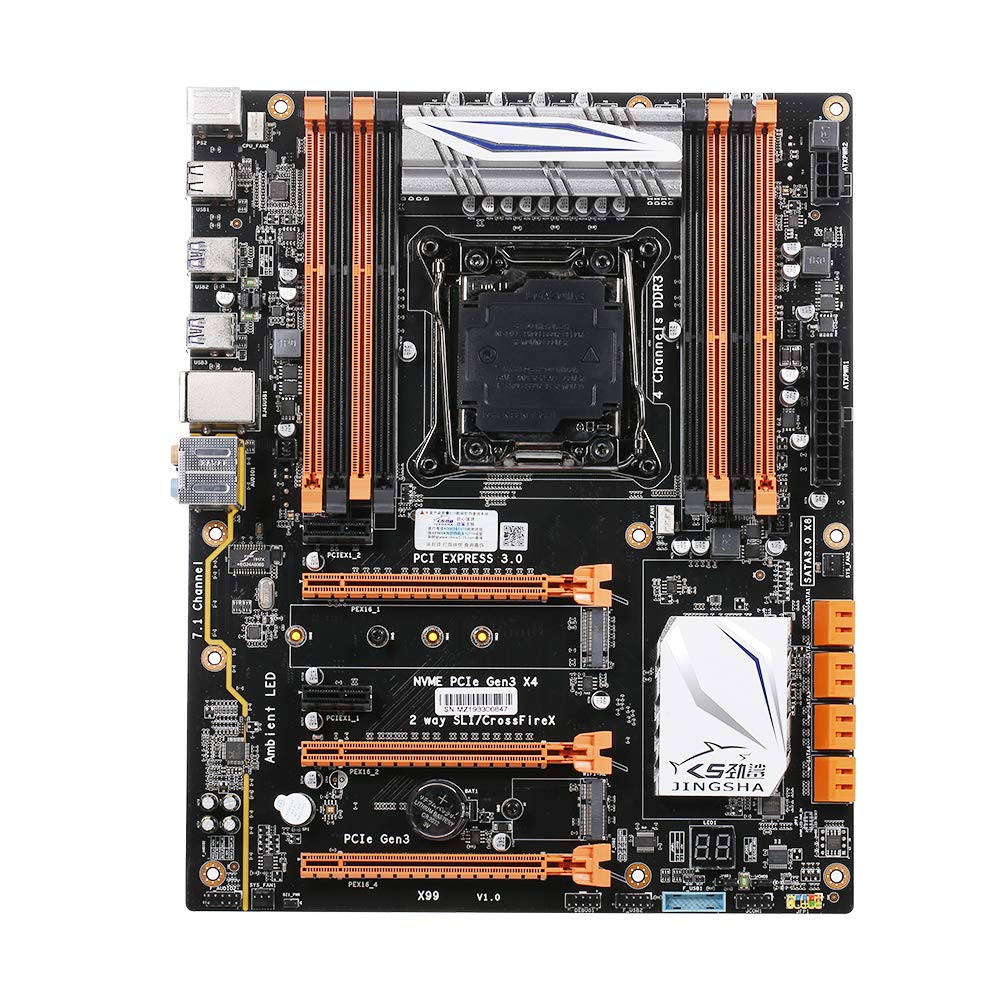
රූපය 1.1: ඉහළ-පහළ view of the Docooler JINGSHA X99-8D3 Motherboard, showcasing its layout with CPU socket, RAM slots, and various expansion slots.
2 ප්රධාන ලක්ෂණ
- M.2 NVME Support: Equipped with an M.2 hard disk port, supporting high-speed PCI-E NVME X4 for optimal operating system and application driver performance.
- Quad-Channel DDR3 Memory: Features 8 DDR3 memory slots across 4 channels, significantly improving capacity and performance, supporting up to 256GB.
- Digital Diagnostic Card: Integrated digital diagnostic card automatically tests hardware devices to ensure proper operation and assist in troubleshooting.
- Multiple PCI-E Expansion Slots: Provides 3 PCI-E expanded slots, configurable as X16/X8 to handle various workloads and multi-GPU setups.
- කල් පවතින ඉදිකිරීම්: Built with a 10-layer PCB and high-quality capacitors for enhanced stability and heat resistance.

Figure 2.1: Diagram illustrating the six core technologies and features of the motherboard, including 4-channel DDR3*8, M.2 hard disk interface, digital diagnostic card, 7.1 channel audio, SATA3.0*8 interface, and Crossfire support.
3. පැකේජ අන්තර්ගතය
පහත ලැයිස්තුගත කර ඇති සියලුම අයිතම ඔබගේ පැකේජයේ ඇති බව කරුණාකර තහවුරු කරගන්න:
- 1x Docooler JINGSHA X99-8D3 Motherboard
- 1x SATA කේබලය
- 1x I/O Baffle (Backplate)
- 1x CPU Fan Board
- A bag of screws
4. පිරිවිතර
| විශේෂාංගය | පිරිවිතර |
|---|---|
| ආකෘතිය | X99-8D3 |
| ආකෘති සාධකය | ATX |
| Graphic Slot | PCIE3.0 16X*3 |
| ජාල කාඩ්පත | ගිගාබිට් ජාල කාඩ්පත |
| ශ්රව්ය නාලිකාව | 7.1 නාලිකාව |
| CPU Type Support | LGA2011 V3 (2629V3/2649V3/2669V3/2678V3/2696V3/2676V3/2673V3) |
| PCB ස්ථර | 10 ස්ථර |
| මතක තව් | DDR3*8 |
| උපරිම මතක ධාරිතාව | 256GB |
| SATA අතුරුමුහුණත | SATA3.0*8, M.2 NVME |
| PS/2 අතුරුමුහුණත | මූසිකය/යතුරු පුවරුව |
| බල සැපයුම | 8 PIN*1, 24 PIN*1 |
| USB අතුරුමුහුණත | USB3.0*6, USB2.0*6 |
| Expanded Interface | PCIE 1X*2, M.2 WIFI*1 |
| අයිතමයේ ප්රමාණය | 30.2 x 24.4 cm (අඟල් 11.89 x 9.61) |
| අයිතමයේ බර | 930.5g (අවුන්ස 32.82) |

රූපය 4.1: සවිස්තරාත්මක view of the motherboard's rear I/O panel, showing PS/2 ports, USB 2.0, USB 3.0, Gigabit Network Port, and 7.1 Audio Ports.
5. පිහිටුවීම සහ ස්ථාපනය
ස්ථාපනය ආරම්භ කිරීමට පෙර, ඔබේ පද්ධතිය බිත්ති අලෙවිසැලෙන් විදුලිය විසන්ධි කර ඇති බවටත්, විසන්ධි කර ඇති බවටත් සහතික වන්න. ස්ථිතික විසර්ජනය වළක්වා ගැනීම සඳහා මවු පුවරුව එහි දාරවලින් හසුරුවන්න.
5.1 CPU ස්ථාපනය කිරීම
- Locate the LGA2011 V3 CPU socket on the motherboard.
- Gently push down the CPU retention lever and swing it open.
- Align the triangular mark on your CPU with the corresponding mark on the socket. Carefully place the CPU into the socket without forcing it.
- CPU එක සුරක්ෂිත කිරීම සඳහා රඳවා ගැනීමේ ලීවරය වසා දමන්න.
- CPU මුදුනට තුනී, ඒකාකාර තාප පේස්ට් තට්ටුවක් යොදන්න.
- Install the CPU cooler according to its manufacturer's instructions, ensuring proper contact and pressure.

රූපය 5.1: සමීප රූපය view of the LGA2011 V3 CPU socket on the motherboard, ready for CPU installation.
5.2 RAM මොඩියුල ස්ථාපනය කිරීම
- DDR3 මතක කොටස් දෙකෙහිම ක්ලිප් විවෘත කරන්න.
- මතක ස්ලොට් එකේ ඇති යතුර සමඟ RAM මොඩියුලයේ නොච් එක පෙළගස්වන්න.
- Press down firmly on both ends of the RAM module until the clips snap into place, securing the module.
- For optimal performance, install RAM modules in matching pairs across the four channels as indicated in the motherboard manual or silkscreen.

රූපය 5.2: View of the eight DDR3 RAM slots on the motherboard, showing their arrangement for quad-channel memory configuration.
5.3 Installing Storage Devices (M.2 NVME & SATA)
- M.2 NVME SSD: Locate the M.2 slot. Insert the M.2 SSD at an angle into the slot, then gently push it down and secure it with the provided screw.
- SATA ධාවක: Connect your SATA SSDs or HDDs to the SATA 3.0 ports using SATA data cables. Ensure the power supply SATA power connectors are also attached to the drives.

Figure 5.3: Close-up of the M.2 interface on the motherboard, highlighting its position and the PCI-E Gen3 X4 connection for high-speed data transfer.
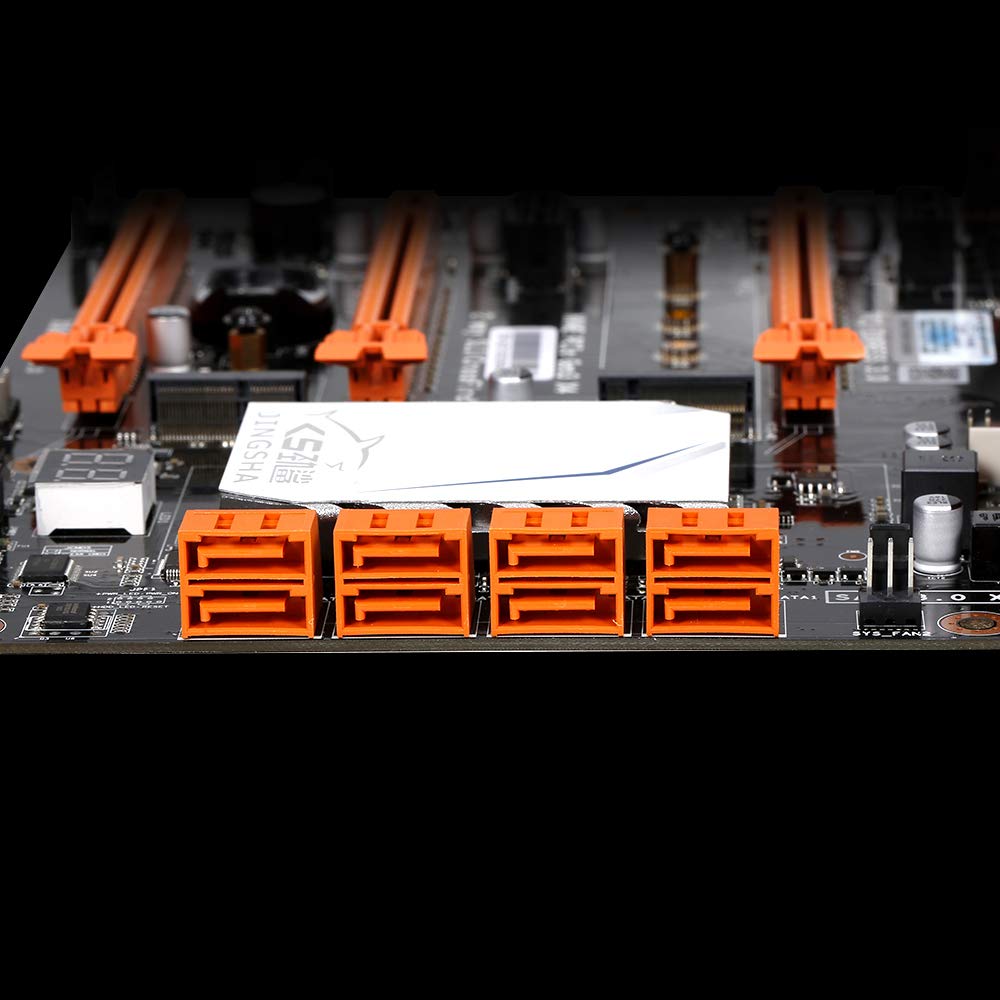
රූපය 5.4: View of the eight orange SATA 3.0 ports on the motherboard, providing ample connectivity for storage devices.
5.4 බල සැපයුම සම්බන්ධ කිරීම
- ඔබගේ බල සැපයුම් ඒකකයේ (PSU) 24-pin ATX බල සම්බන්ධකය මවු පුවරුවේ අනුරූප වරායට සම්බන්ධ කරන්න.
- Connect the 8-pin CPU power connector (EPS12V) from your PSU to the 8-pin port near the CPU socket.
5.5 Installing Expansion Cards (PCIe)
- Locate the desired PCI-E 3.0 x16 or x1 slots.
- ඔබේ පරිගණක කවරයෙන් අනුරූප විස්තාරණ තව් කවරය ඉවත් කරන්න.
- Align the expansion card with the slot and press down firmly until it is fully seated. Secure the card with a screw to the case.

රූපය 5.5: කෝණික view of the motherboard, highlighting the three PCI Express 3.0 x16 slots and the smaller PCIe x1 slots, ready for graphics cards and other expansion cards.
6. මවු පුවරුව ක්රියාත්මක කිරීම
6.1 පළමු ආරම්භය සහ BIOS සැකසුම
- සියලුම සංරචක එකලස් කිරීමෙන් පසු, ඔබේ මොනිටරය, යතුරුපුවරුව සහ මූසිකය සම්බන්ධ කරන්න.
- Power on your system. During the initial boot sequence, repeatedly press the DEL or F2 key (common for JINGSHA motherboards) to enter the BIOS/UEFI setup utility.
- In the BIOS, verify that all installed components (CPU, RAM, storage) are detected correctly.
- Configure boot order to prioritize your operating system installation media (USB drive or DVD).
- Save changes and exit BIOS. The system will restart.
6.2 මෙහෙයුම් පද්ධති ස්ථාපනය
Follow the instructions provided with your operating system (e.g., Windows, Linux) to complete the installation process. Ensure you install all necessary drivers for the motherboard's chipsets, network, audio, and other components from the manufacturer's webඅඩවිය හෝ ඇතුළත් ධාවක තැටිය.
7. නඩත්තු කිරීම
නිසි නඩත්තුව ඔබේ මවු පුවරුවේ ආයු කාලය සහ ස්ථාවර ක්රියාකාරිත්වය සහතික කරයි.
- දූවිලි ඉවත් කිරීම: සම්පීඩිත වාතය භාවිතයෙන් මවු පුවරුවේ සහ සංරචකවල දූවිලි නිතිපතා පිරිසිදු කරන්න. පිරිසිදු කිරීමට පෙර පද්ධතිය ක්රියා විරහිත කර පේනුවෙන් ඉවත් කර ඇති බවට වග බලා ගන්න.
- BIOS යාවත්කාලීන කිරීම්: Periodically check the Docooler or JINGSHA official website for BIOS updates. BIOS updates can improve compatibility, stability, and performance. Follow update instructions carefully to avoid damaging the motherboard.
- ධාවක යාවත්කාලීන: Keep your system drivers updated to ensure optimal performance and compatibility with new software and hardware.
- පාරිසරික තත්ත්වයන්: Operate the motherboard in a well-ventilated environment with stable temperature and humidity to prevent overheating and component degradation.
8. දෝශ නිරාකරණය
මෙම කොටසින් ඔබට මුහුණ දීමට සිදුවිය හැකි පොදු ගැටළු සාකච්ඡා කෙරේ.
8.1 No Power / No Boot
- Ensure the 24-pin ATX and 8-pin CPU power connectors are securely plugged into the motherboard.
- Check if the power supply unit (PSU) is switched on and connected to a working power outlet.
- Verify that the front panel power button cable is correctly connected to the motherboard's header.
8.2 සංදර්ශක ප්රතිදානයක් නොමැත
- Ensure your graphics card (if dedicated) is properly seated in its PCI-E slot and has all necessary power cables connected.
- Check that your monitor cable is securely connected to the graphics card or motherboard (if integrated graphics are used, though X99 typically requires a dedicated GPU).
- Try reseating your RAM modules. Incorrectly seated RAM is a common cause of no display.
8.3 POST Code Display (Digital Diagnostic Card)
The motherboard is equipped with a digital diagnostic card (POST code display) that shows a two-digit code during boot-up. Refer to the motherboard's detailed technical documentation (often available on the manufacturer's website) for a list of POST codes and their meanings. This can help pinpoint the exact component causing a boot failure.

රූපය 8.1: සමීප රූපය view showing the integrated digital diagnostic card (POST code display) on the motherboard, which assists in identifying hardware issues during boot.
9. වගකීම් සහ සහාය
For warranty information and technical support, please refer to the documentation provided with your purchase or visit the official Docooler or JINGSHA webවෙබ් අඩවිය. වගකීම් හිමිකම් සඳහා ඔබේ මිලදී ගැනීමේ සාක්ෂි තබා ගන්න.


